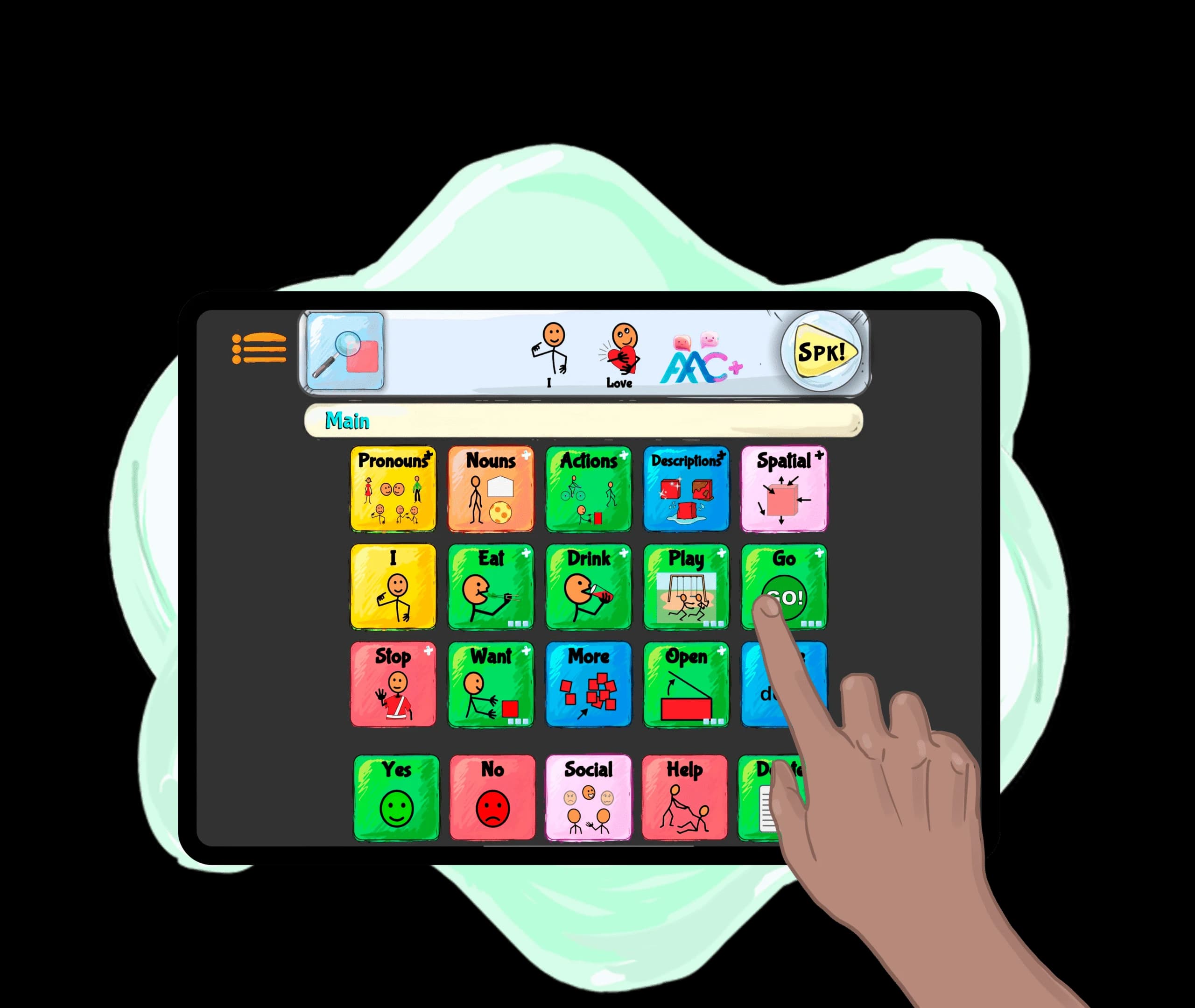
Easy to Use
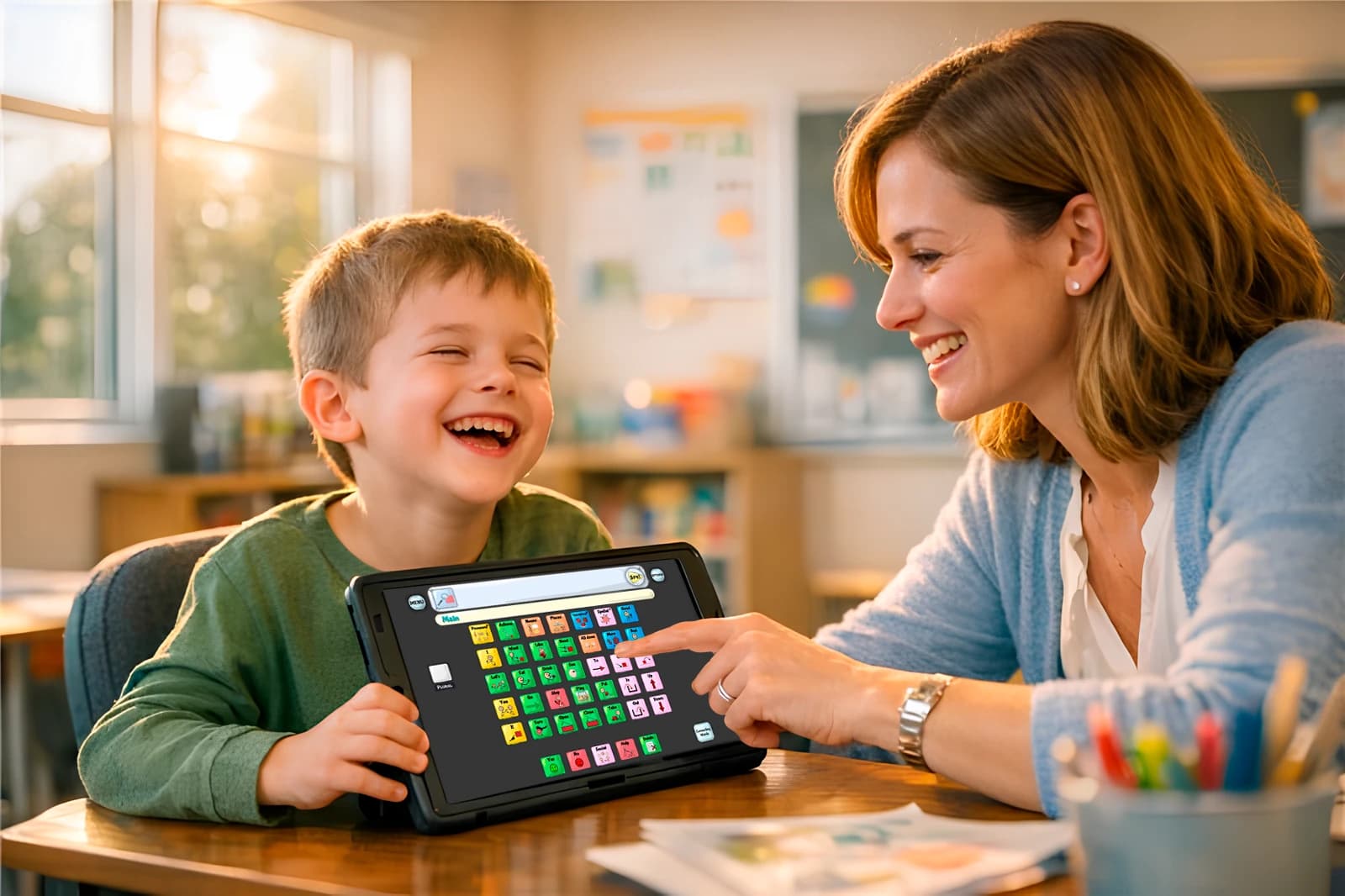
Spkeasy is incredibly easy to navigate. Pick it up and start communicating effortlessly. Watch your child's confidence grow as they tap and combine symbols to communicate.

Explore what sets Spkeasy apart, and learn how it empowers non-verbal individuals to communicate, create, and connect with their world.
Spkeasy is a revolutionary app that empowers children with speech and language challenges to communicate effectively, explore their creativity, and build meaningful connections.
Unlock Your Communication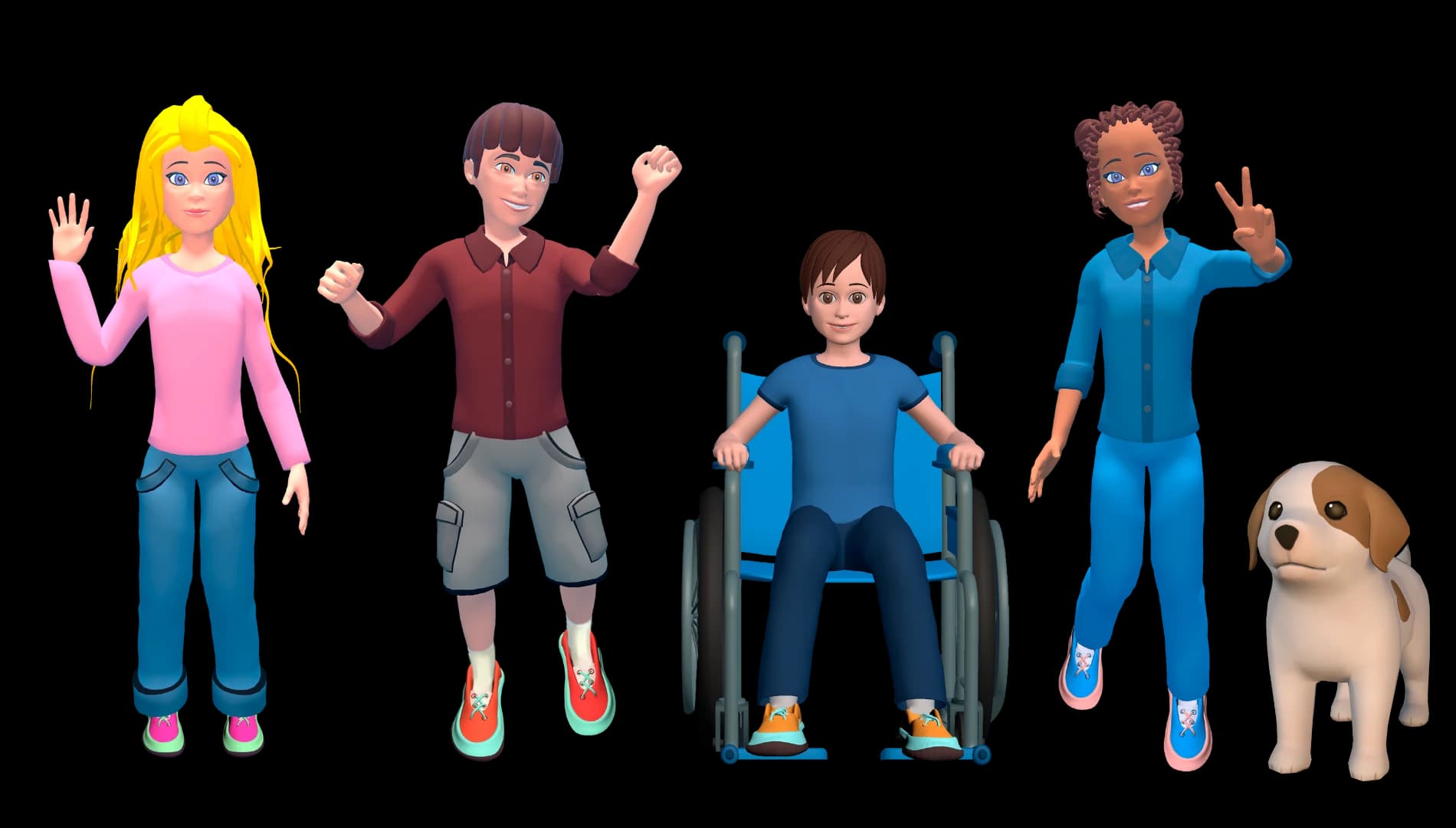
Individuality

Creativity

Vocality

Communication
Augmentative and Alternative Communication (AAC), as defined by the American Speech-language-Hearing Association (ASHA), empowers individuals to express their thoughts, wants, needs, and feelings using various techniques and tools.
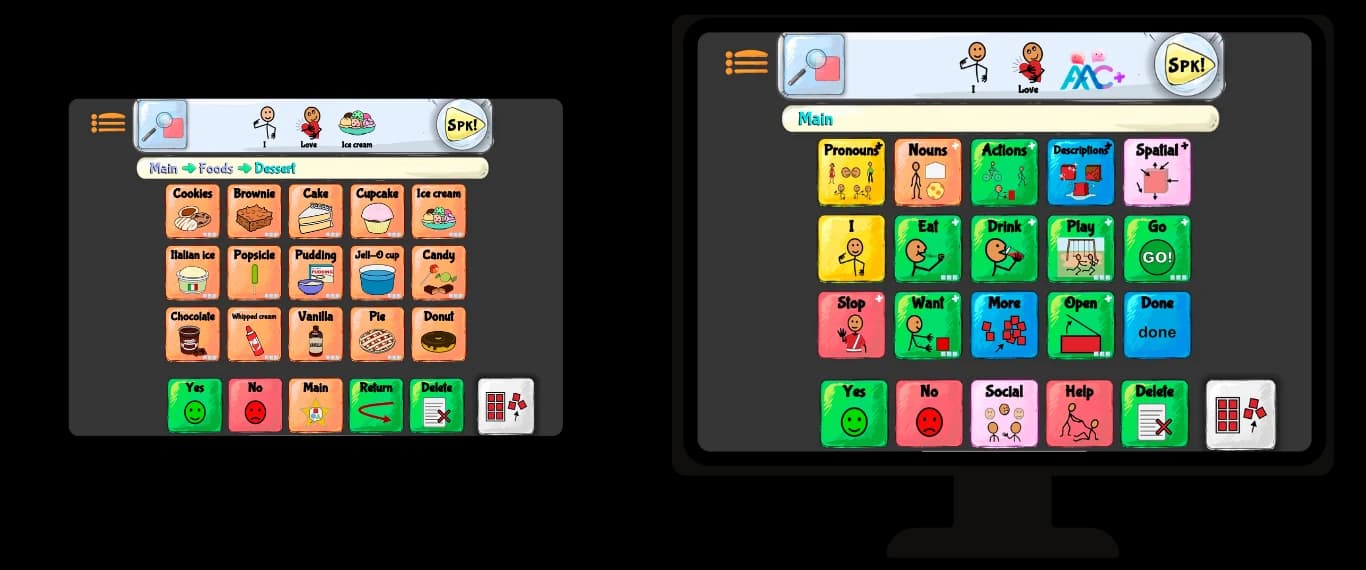
Project the Spkeasy app from your iPad to a compatible laptop or computer monitors

Spkeasy is incredibly easy to navigate. Pick it up and start communicating effortlessly. Watch your child's confidence grow as they tap and combine symbols to communicate.
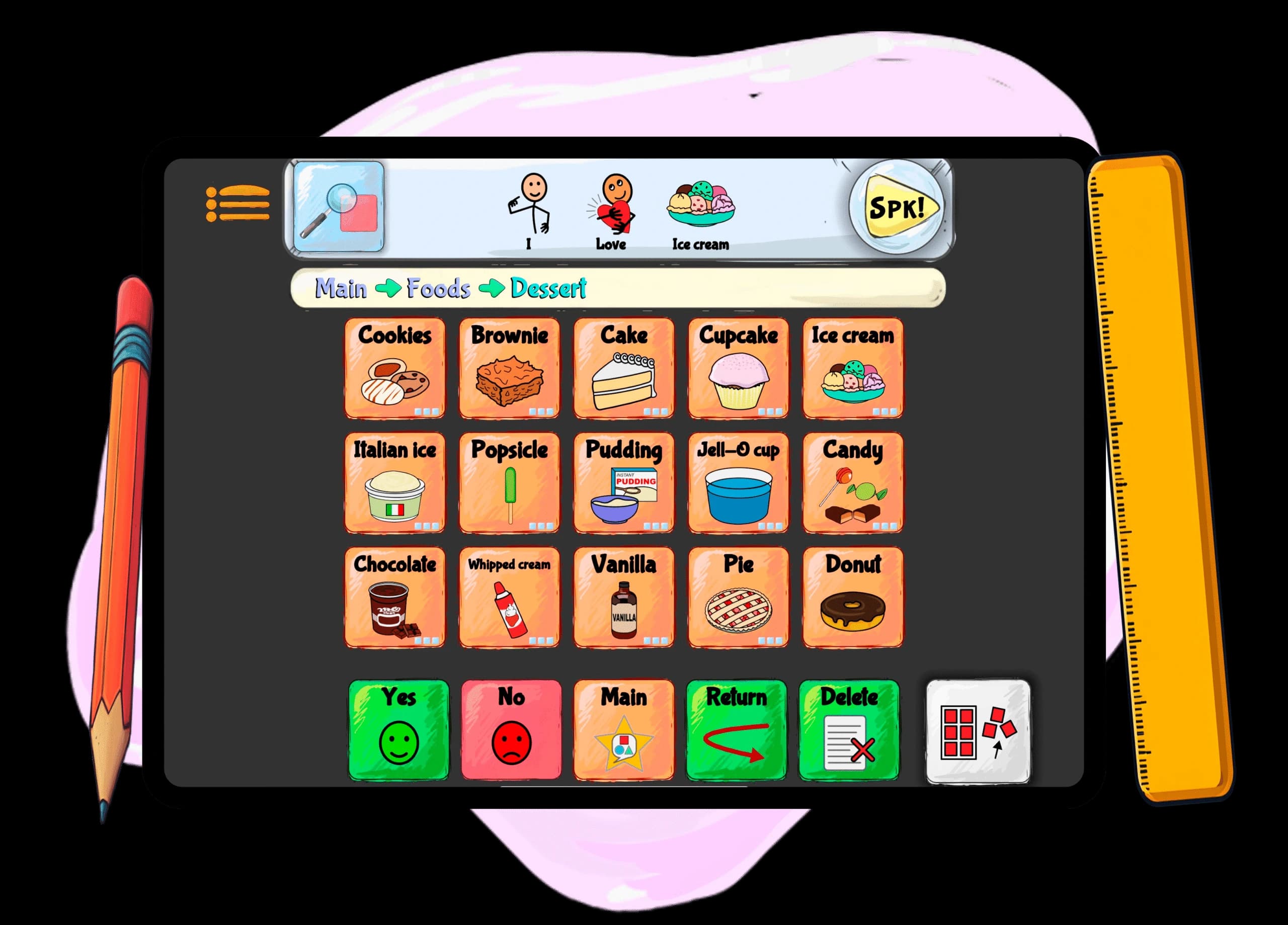
Witness your child's language flourish with Spkeasy. Our unique design aims to support language development from first words to complex sentences.

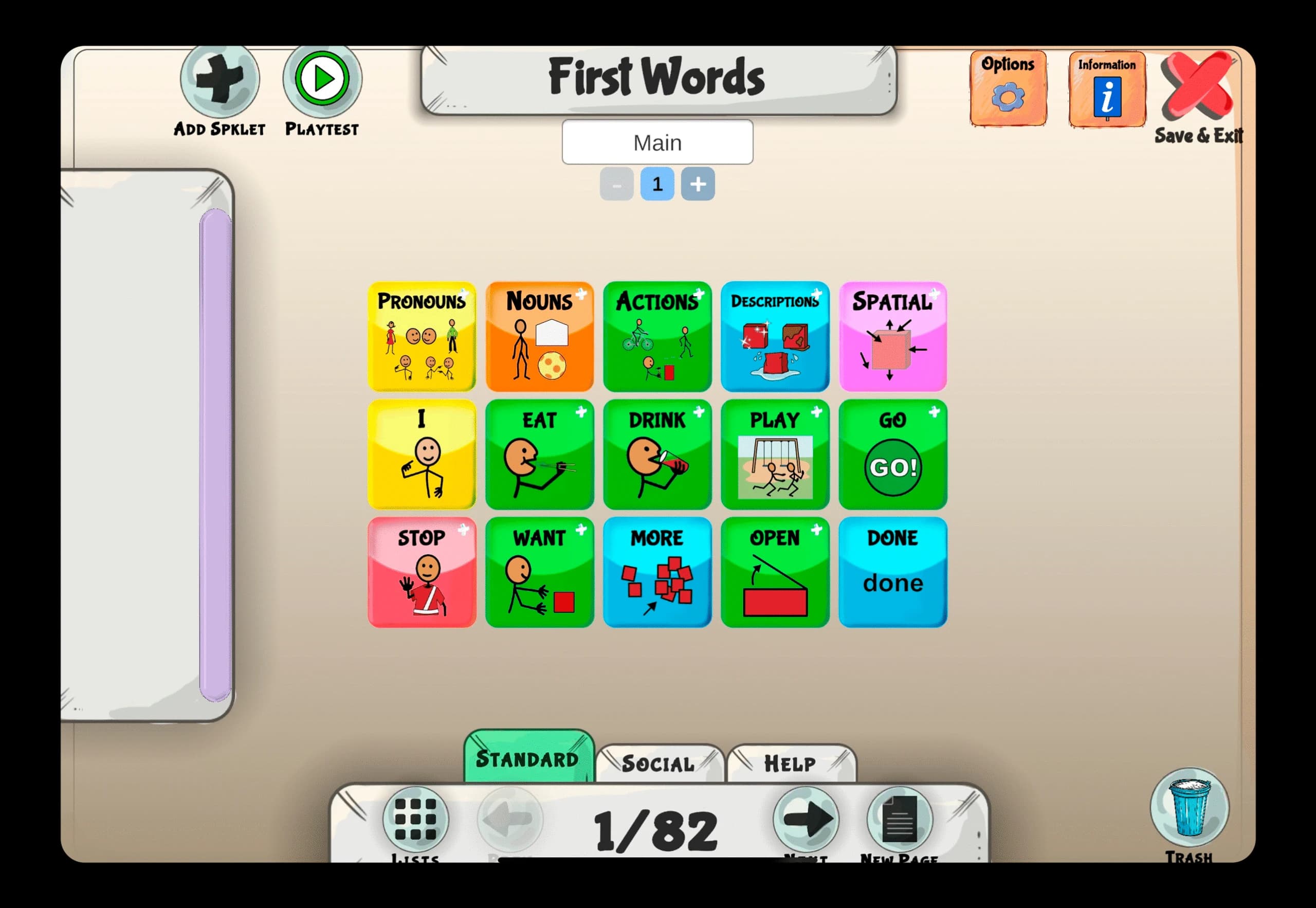
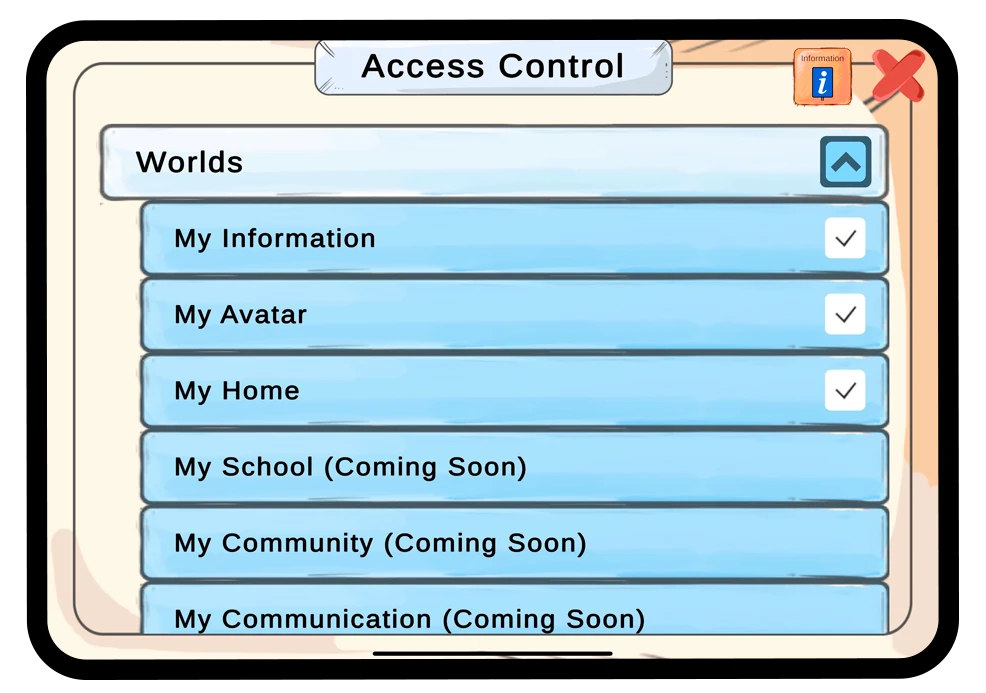
Customize settings for each user and enjoy seamless synchronization across devices. Get the support you need, whenever you need it.
Join the Spkeasy 5,000 Voices Initiative. Help us provide essential communication tools for non-verbal children who need them most.
Hear directly from families and speech-language pathologists using Spkeasy to make communication more accessible in everyday moments.
C-SLPA
"I love using the Spkeasy app with my students. It's child friendly, colorful, engaging, and creates real-life opportunities for language."
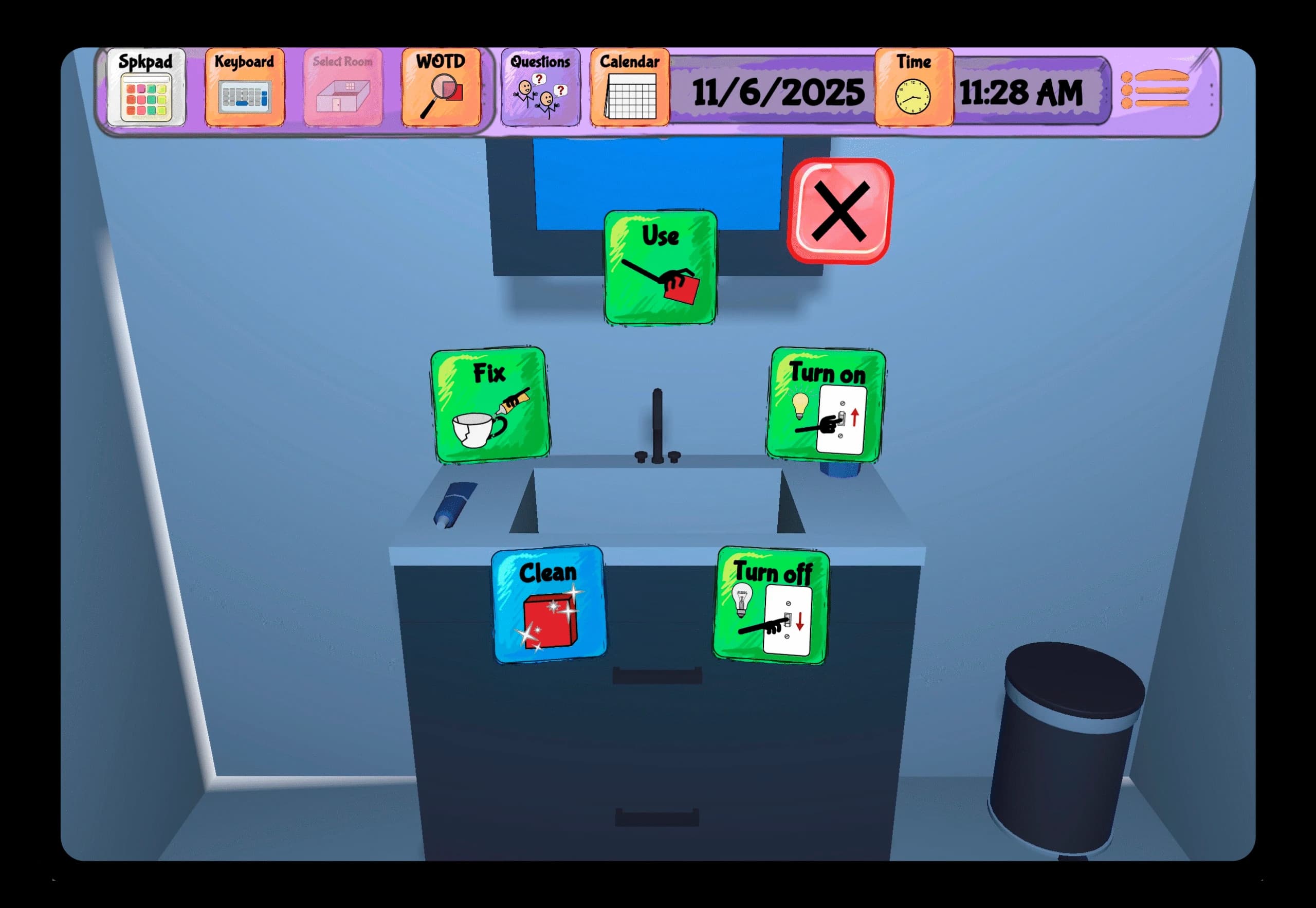
I love using the Spkeasy app with my students...I love the interface. It's really child friendly, it's colorful, it's engaging, and it creates a lot of opportunities for language that can be applied to real life. Especially in the My Home feature, that's, well, the one thing that my students really love to play. They love being able to walk around the house and interact with different objects. Because it, they, they are practical and it's real life application, they take what they use in that game and immediately use it right out in the environment, and will point things out to me.Like soap and sink, and wash my hands, or I want to use the bathroom, or just finding random things in my environment that they see in the game. And I think it's an amazing opportunity to be able to make conversation about different things that we see in different places. And while I do particularly work with younger students, I think that the benefits can go all the way through the lifespan. Because when we think about having adult clients that may have had a traumatic brain injury, or a stroke, or anything like that, and they have aphasia, being able to reorient themselves in the home environment is so important to reestablish a sense of normalcy and encourage independence once again. So, I recommend the Spkeasy app to everyone that I know, and I encourage you to check it out too.
CCC-SLP
"Having AAC support that is easy to use makes it much simpler to build communication into daily routines."
Hi. My name is Miss Allie, and I am a speech language pathologist. I would love to talk to you about the Spkeasy app. I have been using it with my clients for a while now, and I'm very proud to be a part of the Spkeasy community, because this app is great. It is so user friendly. You are able to modify it easily, and it just really helps with all of my clients that need things to be specific to their needs. And there's a great portion in the app as we- well where you are able to kind of navigate a home. So, you can go into your living room, or you can go into your kitchen and there are different responses in there. And I have found that to be such a great way to carry it over with some of my clients that just need that help with being able to functionally carry over what the device means and how they can use it in their real world. And I am so grateful for it. I love it so much. I recommend it to any parent or client that is looking for a new device where they don't have a lot of training with AAC, or they just kind of feel lost. I absolutely recommend trying this app out. And for all of my other fellow speech therapists, I also recommend giving it a try, because there's also a portion where you can edit and modify things on your end as well to help, so that the client, if need be, doesn't have access to it just to make it, of course, easier for everyone.
CCC-SLP
"What stands out is that the activities and exercises are built into the app, so therapy feels both functional and engaging."
Hi. My name is Sarah Bott, and I am a speech language pathologist. I have been using the Spkeasy app, and I don't know if you guys have seen this, but it is really worth looking into. What I really like about it is typically, I have to scramble for different activities, try to find something relevant to my client's device. But this app has the activities and exercises really built into the app itself. So you could use the grid that they have for language. You can use the icons they use for everyday language, and it's actually incorporated into the app using different engaging activities, using different functional tasks that it walks you through. And so it's not just engaging and interesting for clients, but it's also fun.
SLP
"My students stay motivated and engaged because the app lets them practice AAC with interactive activities they genuinely enjoy."
My name is Andrea Vasallo, and I am a pediatric speech-language pathologist. Some of my favorite features on the Spkeasy app, object matching. In this game, students are able to see an object on top and then they will be able to practice selecting different symbols regarding the object that they see. This is a fun way for them to start learning what the symbols look like before actually using the grid selections. Another feature my students absolutely love is this house feature. They're able to interact with different items around the house. For example, the refrigerator, they can open and close the refrigerator. They can get some water or they can even ask for help. So this is a very fun way to get them to play with the different things around the house while also working on their AAC symbols. The grid area on the AAC Plus app has also been very helpful for all of my little students. They've been able to request different items and also comment on things that we've been doing. For example, eat, and it takes them to a lot of different other categories where they can select types of food, different things that they like and don't like to eat. There's categories like Italian and Mexican, so there's a very large variety of selections for them to pick from. The AAC Plus app has enhanced my sessions greatly. My students have become very motivated to learn and very engaged with all of the different games that are provided in the application. I would definitely recommend the AAC Plus app to other speech-language pathologists and teachers out there that have students that do need additional support with either verbal expression or just expressive communication. It is a great way to have them show you what they need or begin to combine words and say short phrases. It's a great way to have them be provided with a model but also interact with the application in a variety of different ways. So it's very, very recommended and 10 out of 10.
@odd__creature
This is the best AAC app I've ever seen
@mpgp1997
This is amazing!!
@forshizlee
I LOVE THIS
@avocadale
I Need this
@carla.ot.host
OT here, yessss 👏
@abbyballard10
Um WHAT?! Where the hell has this been?!
Help someone you love build communication confidence
1 Month Gift Access
No recurring billing
A single one-time gift purchase for 1 month of access.
1 Year Gift Access
Best value one-time gift
A single one-time gift purchase for 1 full year of access.
Lifetime Gift Access
Pay once, use forever
A single one-time gift purchase for lifetime access.
Secure checkout powered by Stripe. The gift link will be emailed directly to the recipient.